
Design is no longer just about how things look.
The tools have changed. User expectations have changed. So has the role of a designer.
So in this blog, we will discuss what’s changing in design and what it means for you. Also, a hint of the ui/ux trends shaping 2026 and where the field is heading.
Contents
- 1 Current Scenario of UI/UX Design
- 2 Top 10 UI/UX Trends of 2026
- 2.1 1. AI as a Design Collaborator
- 2.2 2. Generative UI (GenUI)
- 2.3 3. Hyper-Personalization
- 2.4 4. Spatial & XR Design
- 2.5 5. Micro-interactions & Motion (With Purpose)
- 2.6 6. Calm & Transparent AI Interfaces
- 2.7 7. Accessibility-First Design
- 2.8 8. Voice User Interfaces (VUI)
- 2.9 9. Super Apps & Ecosystem Design
- 2.10 10. Ethical Design & Digital Autonomy
- 3 The Future of UI/UX Design
- 4 Quick Overview
Current Scenario of UI/UX Design
➢ The job market is stabilizing. Team sizes are holding steady, but open roles are still fewer than the number of people entering the field.
➢ Junior roles are harder to land. Companies now expect broader skills: research, systems thinking, and data literacy – from each hire.
➢ Accessibility is still a major problem. Around 95% of websites still fail basic accessibility standards, averaging 51 errors per page.
➢ Design is shifting from visuals to systems. The focus has moved from how things look to how they behave, scale, and build trust.
➢ AI tools are already in daily workflows. Nearly half of creative professionals now use AI every single day.
Top 10 UI/UX Trends of 2026
These are the trends actually shaping how designers work and what users expect right now.
1. AI as a Design Collaborator
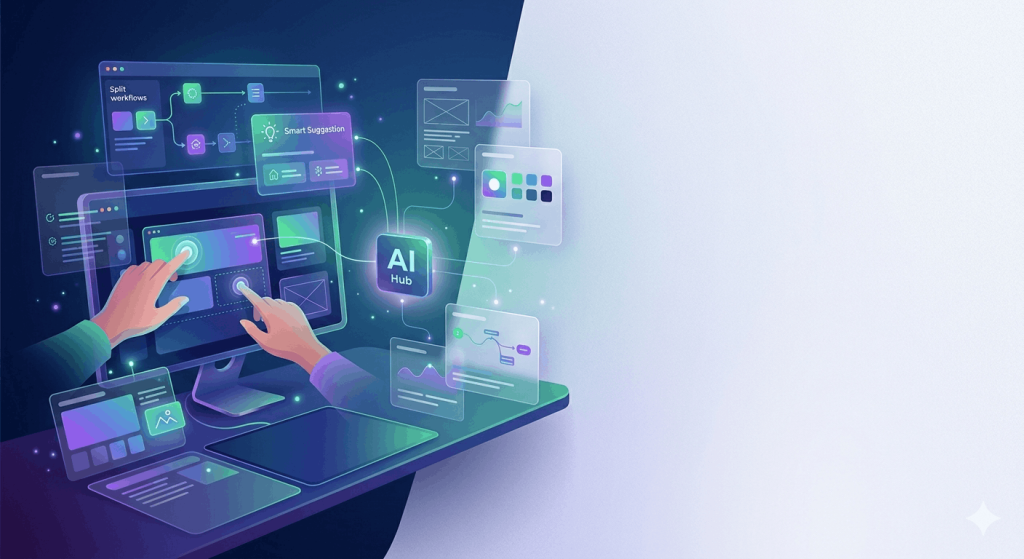
AI is no longer just a buzzword — it’s now a real part of how designers work every day.
Tools like Midjourney, ChatGPT, and Figma AI are being used for ideation, copywriting, user research, and prototyping. Instead of spending hours on repetitive tasks, designers can focus on decisions that actually need human judgment.
73% of designers say AI collaboration will have the most impact in 2026. And 93% are already using these tools in their current work.
The shift isn’t about replacing designers. It’s about making them faster and more strategic. The designers who learn to work with AI will have a clear edge over those who don’t.
2. Generative UI (GenUI)
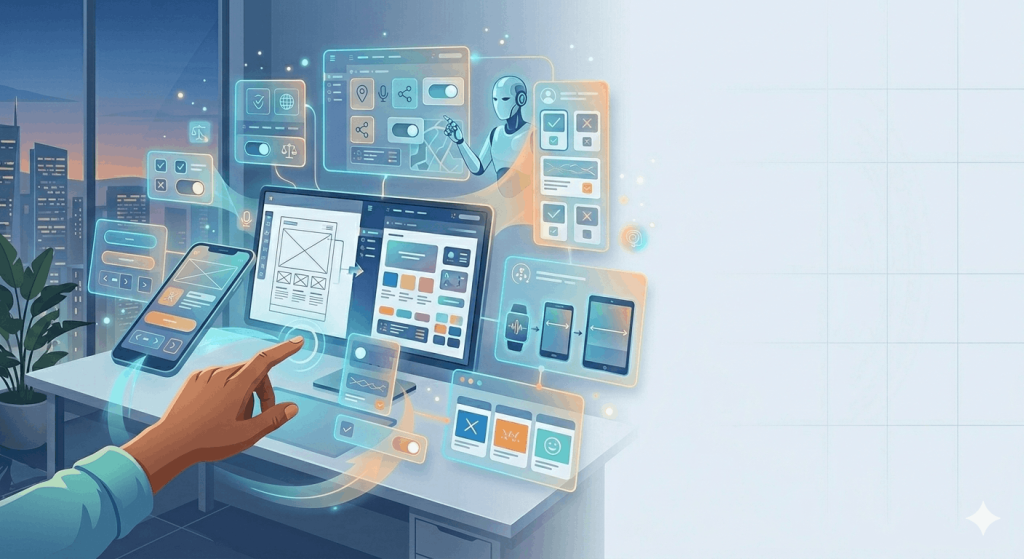
Imagine an interface that builds itself based on exactly what you need at that moment. That’s Generative UI.
Instead of fixed menus and layouts that every user sees the same way, GenUI creates screens in real-time based on the user’s intent and context.
A simple example: You open a banking app to dispute a charge. Instead of navigating through Menu > Support > Claims > History, the app detects your intent and shows only the relevant transaction with a single “Dispute” button. Once you’re done, that interface disappears.
This is the direction software is heading. Static, one-size-fits-all interfaces are becoming outdated. Designers in 2026 are starting to design for intent – not just screens.
3. Hyper-Personalization
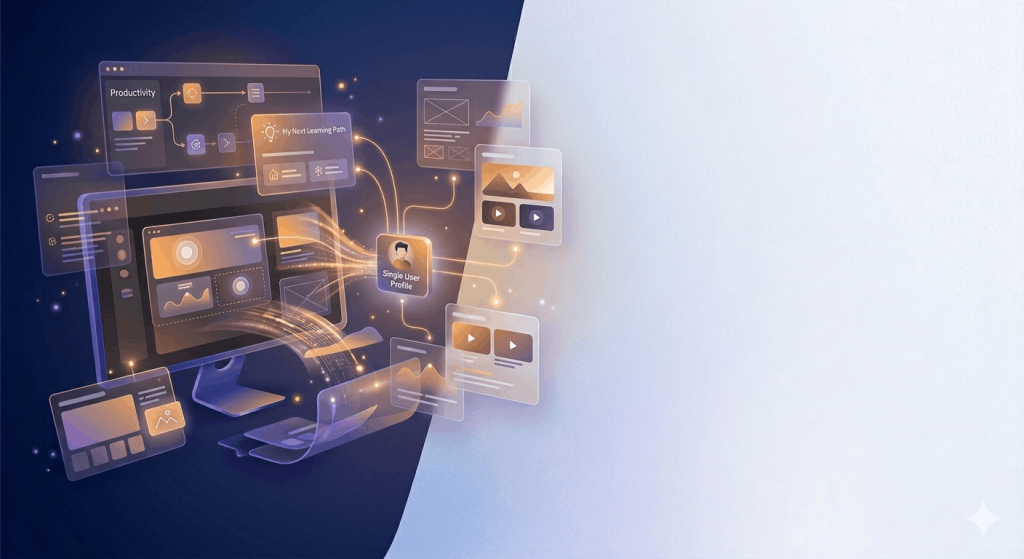
Users now expect experiences that they really want and not just a generic flow that works for everyone.
AI analyzes behavior, preferences, and history to adjust content, layouts, and recommendations in real-time. The result feels more relevant and less like a guessing game.
Spotify does this well. Every Discover Weekly playlist is different because it’s built around your specific listening habits and not a general “popular” list. Netflix does the same with its home screen, where no two users see the same content order.
For designers, this means moving beyond fixed templates. The future is adaptive interfaces that respond to the individual – not the average user.
4. Spatial & XR Design
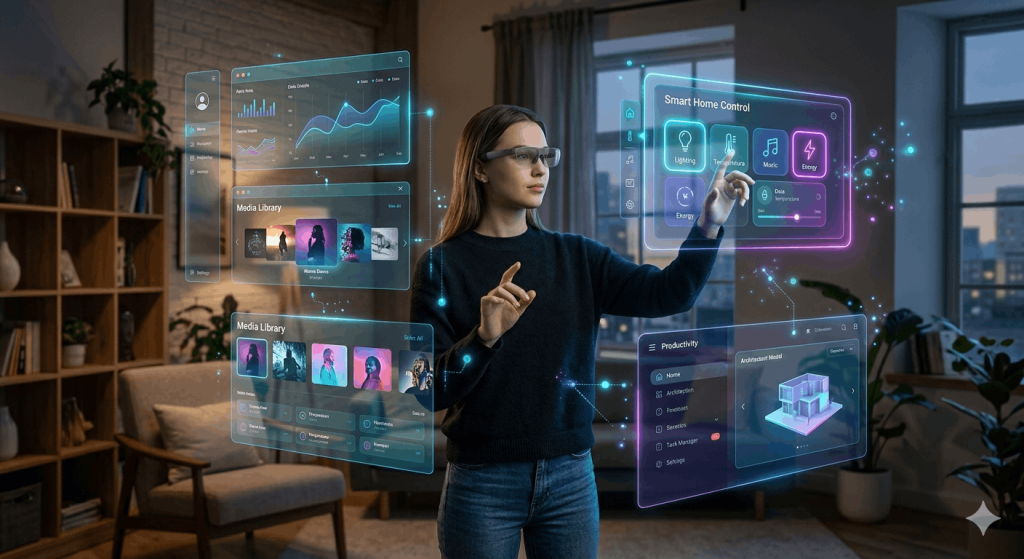
Design is moving beyond the flat 2D screen and into physical space.
Augmented Reality (AR), Virtual Reality (VR), and Mixed Reality (MR) are creating entirely new surfaces for designers to work with. Interfaces are no longer just on a phone or laptop. They can exist in a room, on a table, or overlaid on the real world.
Apple Vision Pro, Meta Ray-Ban glasses, and Samsung’s Galaxy XR headset are all pushing this forward. As these devices become more affordable, more users will expect experiences designed for spatial environments.
For designers, this means learning new dimensions literally. Depth, scale, gesture, and 3D layout are becoming part of the design toolkit.
5. Micro-interactions & Motion (With Purpose)
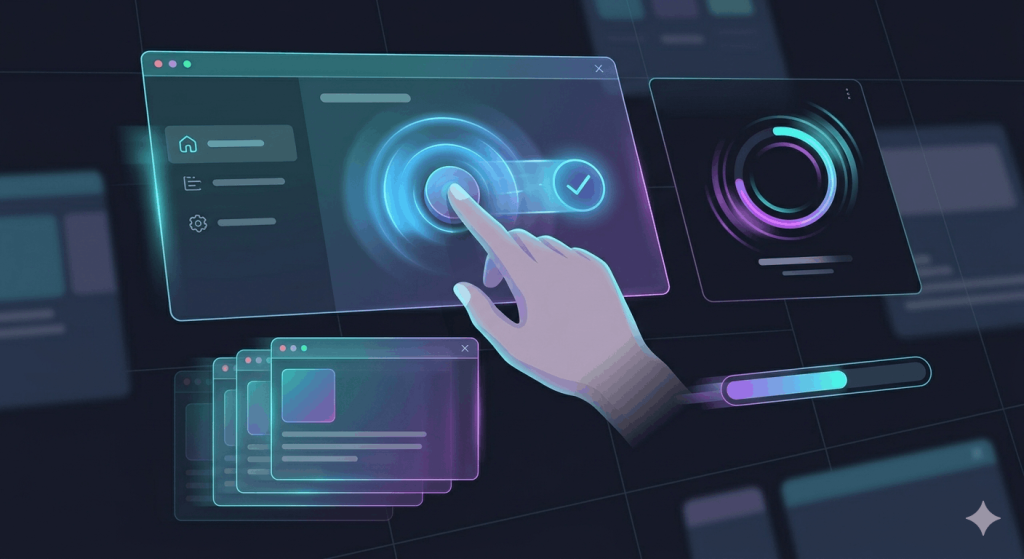
Animations and micro-interactions are back – but they need to do more than just look good.
In 2026, motion is used to communicate. It tells users what just happened, what’s loading, and what needs their attention. Done well, it reduces confusion and builds trust.
A good example: When you submit a form and see a brief “Processing…” state before a confirmation, it feels more reliable than an instant flash of green. That small delay creates confidence. It signals that something real happened.
23% of designers expect motion design to have a major impact in 2026. The key is intent: every animation should have a reason to exist. If it doesn’t guide the user, it shouldn’t be there.
6. Calm & Transparent AI Interfaces
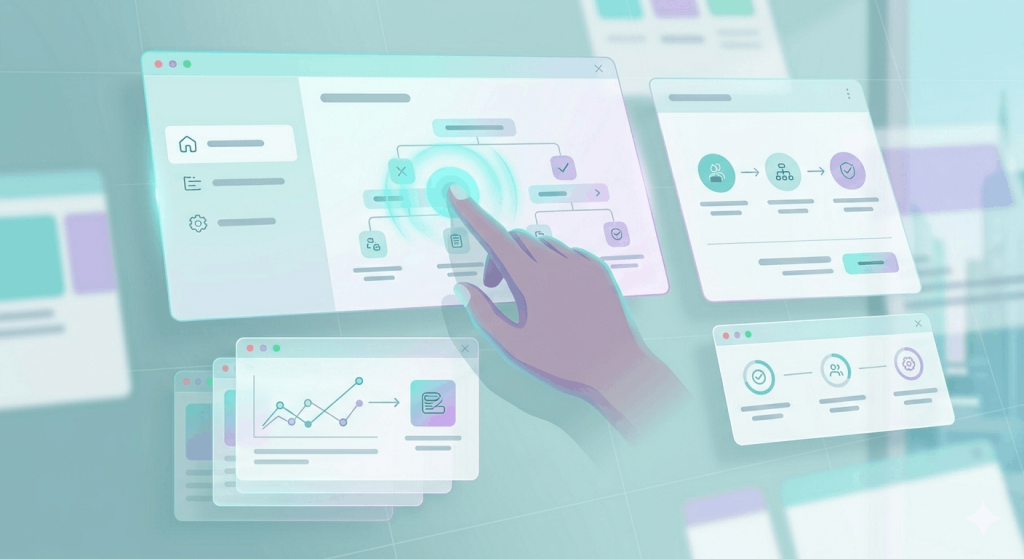
As AI becomes more embedded in products, users are asking a simple question: What is this actually doing?
Transparent AI design means showing users what the system is doing, why it made a certain decision, and how they can change it. It puts the user in control – not the algorithm.
Think of how Google Maps shows you traffic data behind a suggested route. You’re not just answered – you’re shown the reasoning. That transparency builds trust.
In 2026, calm design is winning over visual theatrics. Interfaces that are clear, structured, and easy to understand are outperforming those that try too hard to impress. Trust is becoming the most valuable thing a product can offer.
7. Accessibility-First Design
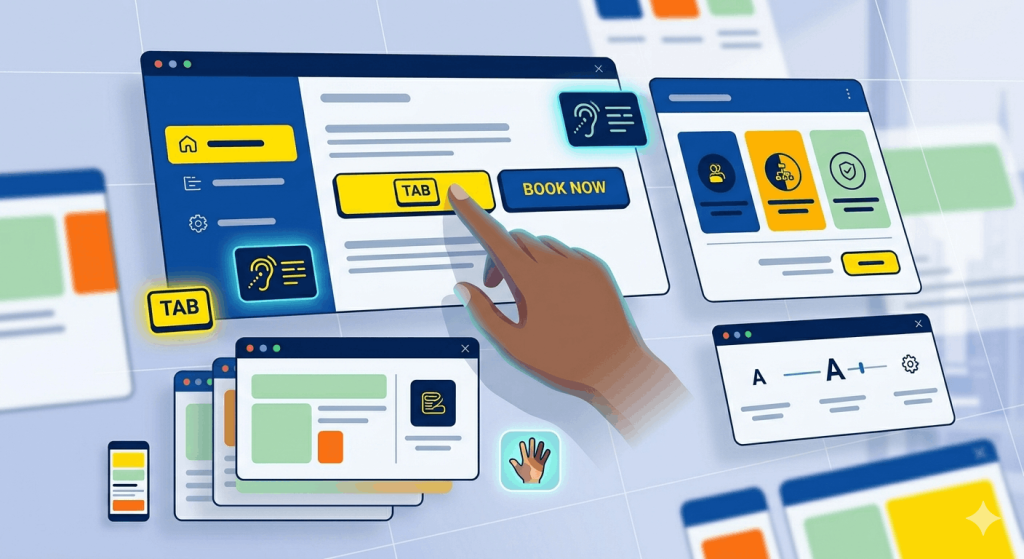
Accessibility is no longer optional – it’s a baseline.
95% of websites still fail to meet WCAG (Web Content Accessibility Guidelines) standards. That’s not just a design problem, it’s a business problem. Inaccessible products exclude users and, in many regions, pose a legal risk.
Accessible design benefits everyone. Captions help people in noisy environments. High contrast helps users in bright sunlight. Keyboard navigation helps power users as much as users with motor impairments.
Designers who understand inclusive design principles are in higher demand in 2026.
8. Voice User Interfaces (VUI)
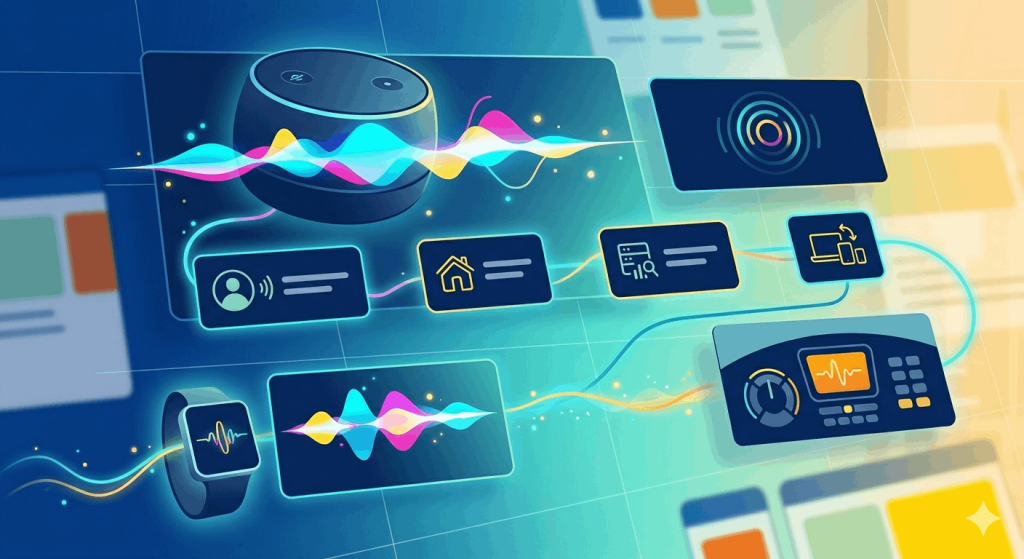
Voice is becoming a standard way to interact with technology, not just a novelty.
Smart speakers, voice assistants, in-car systems, and wearables are all creating demand for well-designed voice experiences. Designing for voice is a completely different discipline; you’re working with conversation flows, not visual layouts.
Amazon Alexa and Apple Siri are the obvious examples, but VUI is expanding into healthcare, banking, and retail, too. The VUI market is expected to reach $29 billion by 2027.
For designers, the skill here is understanding how people speak naturally — and designing systems that respond in kind. Clear, helpful, and human-sounding responses matter more than technical accuracy alone.
9. Super Apps & Ecosystem Design
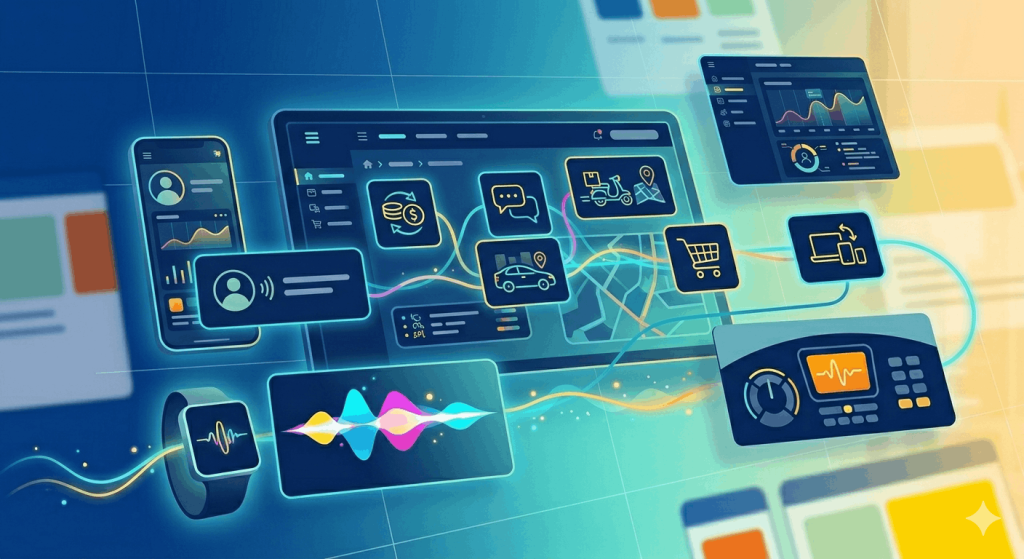
One app. Multiple services. That’s the super app model, and it’s going global.
Apps like WeChat in China and Grab in Southeast Asia already combine messaging, payments, food delivery, bookings, and more – all in one place. Western markets are starting to move in the same direction.
For designers, this changes the scale of the challenge. You’re no longer designing a single product flow. You’re designing an ecosystem where multiple services need to feel consistent, connected, and easy to navigate together.
The biggest UX challenge in super apps is preventing overload. More features can mean more confusion. Good design here means making complexity feel simple.
10. Ethical Design & Digital Autonomy
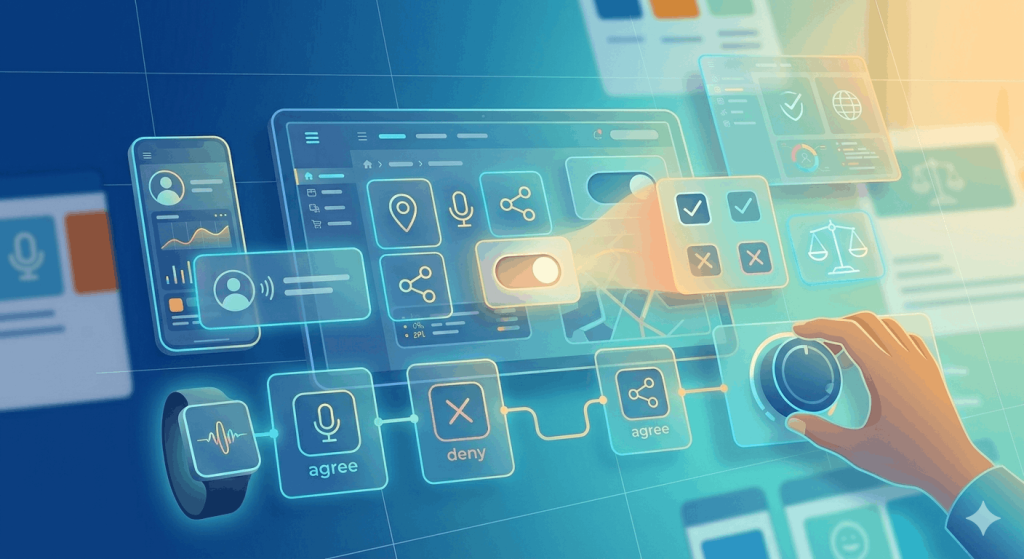
Users are paying attention, and they’re pushing back against designs that manipulate them.
Dark patterns, hidden unsubscribe buttons, misleading notifications, and endless scroll are getting called out publicly. Regulators are catching up, too, with stricter privacy laws and digital rights frameworks being introduced globally.
Ethical design means being honest with users. Clear opt-ins. Easy opt-outs. Transparent data practices. Respecting attention and not designing for addiction.
Companies that prioritize user autonomy are building stronger long-term trust. And for designers, this is becoming a professional responsibility, not just a nice-to-have.
Trends keep changing. Remember, great design always stays ahead.
At Netstager, we turn UI/UX into experiences users actually remember.
The Future of UI/UX Design
The field isn’t slowing down; it’s expanding into new territory.
➢ By 2030, 90% of user interfaces are expected to use AI to personalize experiences in real-time.
➢ UX/UI Designer ranks 8th among the fastest-growing jobs by 2030, according to the World Economic Forum.
➢ The number of UX professionals globally is predicted to grow from 1 million to 100 million by 2050 (Nielsen Norman Group).
➢ Automation will handle repetitive design tasks, freeing designers to focus on strategy, systems, and judgment.
➢ Interfaces will evolve beyond screens into voice, spatial environments, and ambient experiences.
Designers who succeed won’t just be the ones who know how to use tools. They’ll be the ones who think smartly, understand people, and adjust as things change.
Quick Overview
AI is reshaping workflows. Users want smarter, more personal experiences. And the bar for what counts as good design keeps rising.
As a designer or design student, now is the time to build strong fundamentals and stay genuinely curious about what’s coming next.
The shift is already happening. The question is – are you part of it?